A Vietnamese woman wearing an ao dai poses for a photo next to incense sticks arranged in the shape of a map of Vietnam at Quang Phu Cau incense village.

Quang Phu Cau Incense Village

Having existed alongside the capital city for nearly a hundred years, Quang Phu Cau Incense Village is one of Hanoi’s most beloved check-in spots. Through the ups and downs of time, the people here have persevered, remaining dedicated to the incense stick making craft passed down through generations. More than just a livelihood for generations of local people, Quang Phu Cau Incense Village is also a unique and distinctive feature in the outskirts of the capital.

Continue your artisan journey

1. How Far from Hanoi to Incense Village

Quang Phu Cau Incense Village, also known as the incense village, is a quite famous check-in destination located on the outskirts of Hanoi, about 35 km from the city center. The incense stick craft village belongs to Quang Phu Cau commune, Ung Hoa district, and has a history of traditional incense stick making for more than a century.

Although it has existed for over a hundred years, up to the present time, Quang Phu Cau incense village still continues to exist through the years and has become one of the special features that clearly reflects the cultural beauty of the Northern Delta countryside.


2. Is Quang Phu Cau Incense Village Worth Visiting?

Quang Phu Cau incense village attracts visitors thanks to its vibrant and unique beauty, which is rarely found in the suburban areas of Hanoi. When coming here, visitors will admire thousands of bright red incense bundles that are dried and arranged in circular shapes, creating a lively scene like an artistic painting.

Not only is it a place that preserves a traditional craft village in Hanoi for more than a hundred years, but Quang Phu Cau also offers a unique cultural experience—where you can directly observe the manual incense-making process, talk with local villagers, and feel the diligence and skillfulness in every step.

It is the combination of labor beauty, vibrant colors, and a peaceful atmosphere that makes this place an ideal destination for those who love culture, as well as photographers looking for unique, artistic, and emotional photo angles.

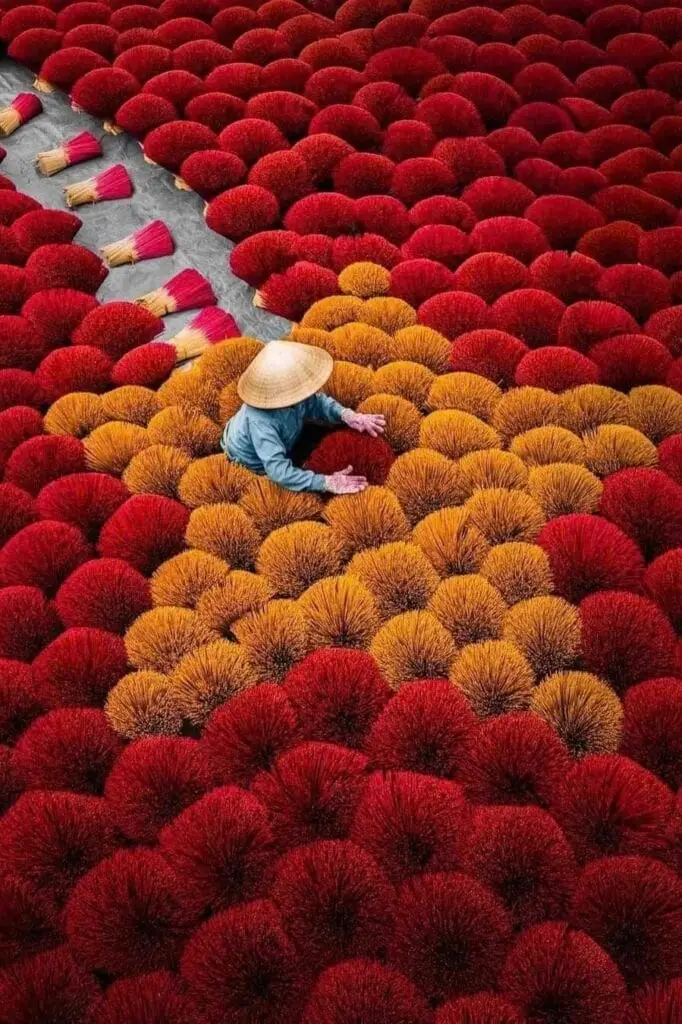
Extremely colorful photos of tourists at Quang Phu Cau incense village.
Panoramic view of the "red blooms" at Quang Phu Cau incense village tour near Hanoi.
Traditional pink and red incense sticks splayed out at Quang Phu Cau village.

3. History and Culture

3.1. Why Does Quang Phu Cau Make Incense? – The Legend of Xa Cau Village

According to the village elders, this land was once called Xa Cau Trai. Legend says that long ago, three sisters who were brave female generals named Chieu Nuong came here to stay. They were loyal soldiers of the Trung Sisters after fighting against Ma Vien’s army from the Chinese Han Dynasty.

While living with the locals, the three women were protected and loved by the villagers. In return, they helped the people store food, make weapons, and build a peaceful life. Most importantly, they taught the villagers how to make black incense—a simple but sacred type of incense that is very important to Vietnamese spiritual life.

After the three generals passed away, the people of Xa Cau honored them as the Guardian Gods of the village. They built a temple to remember their great work (in Vietnamese culture, these are spirits or historical figures who protect a village, and people worship them in a communal house or temple).

That temple, now called Lang Ca Temple, still stands quietly in the village today. It is a witness to history, the century-old incense craft, and the beautiful Vietnamese tradition: “When drinking water, remember the source” (always be grateful to those who came before us).

At the beginning, incense making was just a side job for farmers during their free time. However, because the local people are very skillful and have secret recipes that create a unique scent, their products became famous. Over time, incense making turned from a part-time job into the main business that supports the whole village.


The culture of burning incense in Vietnam

3.2. The Significance of Incense in Vietnamese Culture

In Vietnamese spiritual culture, burning incense is not only a solemn ritual but also a deeply meaningful spiritual practice.

Thousands of years ago, when humans discovered fire, they started burning woods such as cinnamon, agarwood, or pine to stay warm. They realized these woods produced a very pleasant smell that helped them relax. Moreover, they saw that smoke always rises to the sky. This led people to believe that smoke is a bridge used to send prayers to their ancestors and gods. Besides spiritual reasons, incense smoke also helps remove bad smells, clean the air, and keep insects away.

Inheriting that concept, the incense sticks on the ancestral altar today are a delicate combination of two elements: Fire and Wood. Wood, coming from Mother Earth, combines with the warm flame (Fire), symbolizing the continuous movement and balance of the universe. When the incense is lit, the light smoke rises, acting as a strong “spiritual bridge,” carrying prayers, gratitude, and emotions from descendants across space to reach the sacred world of their ancestors.

Besides its connecting meaning, the gentle scent of incense is also like a medicine for the soul, helping reduce stress and bringing people into a state of calmness, meditation, and deep concentration. From a life perspective, natural incense smoke is also considered a source of pure energy, helping to purify the space, ward off negative things, and create a peaceful and warm atmosphere for every family.


4. Things to do at Incense Village

4.1. Visiting the Quang Phu Cau Village Temple

The journey usually begins at the village temple, which is the center of religious and cultural beliefs of the local people. Here, visitors can admire the ancient architecture typical of the Northern Delta region and listen to stories about the origin of the craft village, as well as the spiritual beauty associated with the traditional incense burning practice that has been preserved for generations.

Vibrant red incense bundles drying under the sun at Quang Phu Cau incense village.

4.2. Admiring and Taking Artistic Photos at the Incense Drying Yard

The most impressive highlight of Quang Phu Cau incense village is the large drying yards filled with bundles of incense sticks in bright red and pink colors. Local people skillfully arrange them into artistic shapes such as the Vietnamese flag, the map of Vietnam, or giant blooming flowers. This is the perfect place for visitors to freely take creative and culturally rich photos.

A Vietnamese woman in a traditional Ao Dai arranging vibrant red incense bundles to dry in Quang Phu Cau incense village, Hanoi.

4.3. Participating in an Incense-Making Workshop in Quang Phu Cau

To truly understand the craft, visitors can directly join an incense-making workshop in Quang Phu Cau. You will personally experience traditional manual steps such as splitting bamboo, shaping sticks, dyeing the incense base, and drying them.

At the same time, you can observe how locals use modern machinery in incense making, thereby clearly seeing the interaction between traditional and modern methods.

The artisan is instructing tourists on how to make a handmade incense stick at the traditional incense-making village of Quang Phu Cau.
Screenshot
A traveler learning how to make incense sticks with local experts in Hanoi.

4.4. Strolling Around the Village and Observing Daily Life

Leaving the busy photo areas, visitors can slowly walk through small alleys to feel the real rhythm of life in the village. Along the way, you will easily see artisans carefully bundling incense, preparing bamboo, and working diligently. The natural scent of materials spreads in the air, creating a very special atmosphere.

This is also a great opportunity to talk directly with local people and learn more about their hardworking lifestyle.

People are drying incense sticks in Quang Phu Cau incense village.

4.5. Traditional Cooking Class at Mrs. Vui’s Old House

A perfect way to end your trip is joining a cooking class at Mrs. Vui’s traditional old house. In a simple and rustic space, visitors will learn how to make Vietnamese fresh spring rolls.

Under her detailed guidance, you will prepare ingredients such as pork, herbs, lettuce, and rice noodles, then roll them carefully. After that, everyone will sit together and enjoy the food they made, creating a warm and meaningful cultural experience.

The dedicated hands of an artisan at Quang Phu Cau, a famous craft village near Hanoi.
Pho roll a traditional specialty in Hanoi

5. How to Get to Quang Phu Cau Incense Village and Local Tips

If you are wondering how far from Hanoi to incense village, it is about 35–40 km south of the city center. There are several ways to travel depending on your budget and preference:


5.1. By Motorbike (Self-driving)

This is a flexible and popular option for young travelers and international visitors who enjoy exploring. Suggested route: from the city center, go along Ton Duc Thang → Nguyen Luong Bang → Tay Son → Nguyen Trai, then continue through Ha Dong area (Tran Phu → Quang Trung) to Ba La intersection. From there, turn left onto National Road 21B and continue straight for about 20 km.

When reaching Quang Phu Cau, you will easily recognize the colorful incense drying yards along both sides of the road.

Travel time is about 1–1.5 hours, with a cost of around 150,000–220,000 VND for motorbike rental and fuel.

Important note: Roads like Nguyen Trai and Quang Trung are often crowded during rush hours. National Road 21B is quite narrow and has many trucks and buses, so you should drive carefully. It is recommended to use Google Maps for easier navigation.


5.2. By Taxi or Ride-hailing Services

This option is suitable for groups of 2–4 people, families, or visitors who prefer comfort. Travel time is about 1 hour, and drivers usually take National Road 21B or the Phap Van – Cau Gie expressway before turning into connecting roads.

  • One-way price: 350,000–500,000 VND
  • Round trip (including 2–3 hours waiting): 700,000–900,000 VND

Note: If using ride-hailing services, you should arrange a return trip in advance or ask the driver to wait, because it is quite difficult to find a ride back from the village.


5.3. By Bus (Public Transport)

This is the most budget-friendly option and allows you to experience local transportation.

  • Step 1: From the city center, go to Yen Nghia Bus Station by Cat Linh – Ha Dong Metro (about 25 minutes, ~15,000 VND) or city buses such as 01, 02, 21A, 27 (45–60 minutes, ~7,000 VND).
  • Step 2: From Yen Nghia, take bus 91 to Phu Tuc, and get off at Quang Phu Cau Post Office or Vac intersection (45–60 minutes, ~10,000 VND).

Total cost is only about 15,000–23,000 VND per trip.

Note: From the bus stop, you may need to walk or take a short motorbike taxi (10,000–20,000 VND) to reach the main incense drying yards inside the village. Also, the last bus (route 91) usually ends quite early, around 18:00–18:30, so you should plan your visit time carefully.

More than just a place to visit, Quang Phu Cau is where every incense stick carries a story of heritage, devotion, and quiet beauty—an experience worth discovering for yourself when you step beyond Hanoi.

-The Hanoi Artisan

Chuon Ngo mother of pearl inlay village

Chuon Ngo Mother-of-Pearl Inlay Village

Chuon Ngo Mother-of-Pearl Inlay Village: A thousand years preserving the essence of tradition. Chuon Ngo village (Chuyen My commune, Hanoi) is the cradle of the thousand-year-old art of mother-of-pearl inlay. Since the Ly Dynasty in the 11th century, the sounds of chisels and saws have echoed here, persistently creating masterpieces from shimmering, colorful seashells and snail shells.

Other craft villages in the artisan’s journey:

1. Introduction to Chuon Ngo Mother-of-Pearl Inlay Village

Chuon Ngo Mother-of-Pearl Inlay Village is nestled in the long-standing cultural flow of the Northern Delta, about 40km from the center of Hanoi. With a history of more than 1,000 years, this place is considered the cradle of traditional Vietnamese inlay art—a craft that requires extreme sophistication, patience, and a high sense of aesthetics.

Hanoi countryside village – Chuon Ngo Mother-of-Pearl Inlay Village

Coming to Chuon Ngo, visitors do not simply visit a craft village, but also step into a nostalgic and peaceful space. The sound of chisels and grinding gently echoes in small houses; the sweet scent of wood spreads in the air; and above all is the image of the skillful and meticulous hands of artisans, quickly grafting each shimmering piece of shell into works full of Vietnamese soul. It is the intersection between tradition and authentic emotions that makes Chuon Ngo one of the most special Hidden gems Hanoi has to offer for those who want to find slowness and cultural depth. This is a perfect choice for a countryside day trip from Hanoi and a meaningful Hanoi village trip

2.History & Culture of Chuon Ngo VillageThe Soul of the Craft

2.1. Chuon Ngo village history

According to legend, the art of mother-of-pearl inlay in Chuyen My was taught to the villagers of Chuon Ngo by Truong Cong Thanh, a general during the Ly Dynasty. Elderly villagers recount that after achieving many victories, he requested to resign from his official position and return to Chuon Ngo to enjoy his old age. While strolling along the seashore, he was captivated by the shimmering, multicolored beauty of clam and snail shells. He gazed at them intently, then collected them and meticulously pieced them together into shapes and letters. After researching in books, he discovered it was mother-of-pearl inlay.

During a leisurely moment, noticing the many layers of mother-of-pearl with their various colors and beautiful, jade-like sheen, he tried incorporating them into a lacquered couplet with old brown characters, finding it very beautiful. He continued to collect more mother-of-pearl from the sea and created a horizontal plaque and a couplet. The art of mother-of-pearl inlay was thus established. In 1099, before his death, Truong Cong Thanh passed on the craft to the people of Ngo village. Since then, the craft has continued to develop and spread widely, bringing prosperity for generations. Today, the people of Chuyen My worship him as the Village Guardian Deity and the Ancestor of the Mother-of-Pearl Inlay Craft.

The meticulous hands of artisans in shaping shells in Chuon Ngo village.

2.2. The Artisan’s Story

In Chuon Ngo Mother-of-Pearl Inlay Village, many artisans still tell a simple but very true story about their profession. An elderly artisan once said: Once, I made a painting of a countryside scene—with a banyan tree, a boat wharf, and a small boat. A foreign guest looked at it for a long time and asked me: ‘How can you put an entire memory into such a small piece of wood?’ At that moment, I realized that what I am doing is not just making handicrafts, but preserving the memories of an entire countryside.”

He added: Inlay is not just about cutting shells and putting them together. Each piece must be chosen for the right thickness, the right luster, and placed in the right spot for it to have ‘soul’. The maker must understand the story they are telling for the product to live long.” For the craftsmen here, each product is a way to preserve culture—from images of the village to ancient legends. Therefore, the greatest value of this Hanoi village craft lies in the soul that the artisan puts into every tiny detail.

3. What to See and Do: Things to do in Chuon Ngo Village

3.1. Chuon Ngo Product Exhibition Center

If you want to fully feel the essence of the village, the Exhibition Center is a stop you should not miss. This is the place that gives you the clearest view of the finished beauty of the works—from the delicately polished surfaces to the smallest details handled with amazing precision, revealing the meticulousness behind each piece. Standing before these products, you will be able to admire the traditional aesthetic beauty that has been passed down through many generations.. This experience is a highlight of any Mother-of-Pearl Inlay Village.

3.2. Chuon Ngo Communal House

Chuon Ngo Communal House is not only a spiritual center but also a place that keeps the historical pride of the villagers. Inside, the horizontal plaques and couplets tell the story of a land attached to the craft. Especially, a plaque with the inscription: “The people of Ngo village are always grateful to this sacred land for giving us a prosperous life thanks to the traditional craft of our ancestors and vow to develop it forever” stands out as a symbol of gratitude to the ancestor Truong Cong Thanh.nor the heritage of the Ancestor, Truong Cong Thanh.

3.3. Chuon Ngo Mother-of-Pearl Mosaic Church

Chuon Ngo Mother-of-Pearl Mosaic Church is a vivid testament to the unique cultural fusion in the mother-of-pearl mosaic village. Inside the church’s solemn space, mother-of-pearl mosaic paintings depict familiar images of Catholicism such as Jesus, the Virgin Mary, and biblical stories, but rendered using traditional Vietnamese craftsmanship. The shimmering mother-of-pearl not only highlights the details but also creates a beauty that is both sacred and intimate.

The combination of traditional mother-of-pearl mosaic art and Catholic symbolism has created a space that both bears the imprint of local culture and reflects the harmonious integration of different values—where the craft becomes a bridge between faith and village identity.

Mother-of-pearl inlaid church in Chuon Ngo village
Mother-of-pearl mosaic portrait of Jesus

3.4. Hands-on Mother-of-Pearl Inlay Workshop with Artisan Nguyen Van Dung

At the workshop of artisan Dung, everything becomes much more real. Small pieces of shell are cut, ground, and assembled entirely by hand with absolute patience. When observing this process, you will change the way you look at finished products—they become the crystallization of time and effort. You will also have the opportunity to directly experience a step in the process under his guidance in an exclusive Mother-of-Pearl Inlay Workshop.

A mother-of-pearl mosaic wall art depicting Hoan Kiem Lake.
artisan working mother-of-pearl-inlay Chuon Ngo village

3.5. Local Family Home & Cooking Experience

This experience brings a close and authentic feeling to your Hanoi village trip. At the home of Mr. Ngoc Anh, you will be welcomed like an old friend. You will join the host to prepare Pho Cuon—a simple dish that connects people. There is no rush; everything happens naturally through the stories shared. It is a moment where the boundary between “tourist” and “host” disappears, leaving you with the feeling of truly living in the rhythm of Chuon Ngo people.

a small corner in Chuon Ngo mother-of-pearl inlay village
Vietnamese fresh spring roll

4. How to get to Chuon Ngo Village

Chuon Ngo Mother-of-Pearl Inlay Village is located about 40km south of Hanoi city center, making it quite convenient for a Hanoi countryside village with many different options:

Bus: From the Old Quarter, take a taxi to Giap Bat station and take bus No. 06 (Giap Bat – Phu Ly). After about 1–1.5 hours, get off near Phu Xuyen town. From there, it is just a short 5–7 km taxi or motorbike ride to the village. This is an affordable and straightforward option.

Motorbike: A “local” experience, costing around 80,000 VND to 160,000 VND per day. From Hanoi center, you can go towards National Highway 1A or the Phap Van – Cau Gie highway. The journey takes about 1–1.5 hours and the road is quite easy to go. Check the map: Use Google Maps to find the best route if driving yourself.

Taxi/Ride-hailing: This is the most convenient way if you travel in a group. Just enter “Chuon Ngo” into the app, and you will be taken directly to the village.

In Chuon Ngo, the beauty of the craft lies not only in the shimmering colors of the sea, but in the silent patience of an artisan who transforms a simple shell into a thousand-year-old story.

-The Hanoi Artisan!

Local artisans at Ha Thai lacquer craft village creating traditional Vietnamese paintings.

Ha Thai Lacquer Village

1. A soulful trip to the peaceful Hanoi countryside 

Located nearly 20km south of Hanoi’s city center, Ha Thai Lacquer Village (Duyen Thai commune, Thuong Tin district) is one of the capital’s most famous Hanoi craft villages. This is an ancient traditional craft that has been preserved, innovated, and developed by the local people to this day, making it a significant part of the Ha Thai lacquer village heritage.

More than just a sightseeing trip, a journey to Ha Thai is a journey to a peaceful haven in the heart of the Hanoi countryside. As soon as you step through the village gate, the hustle and bustle of life seems to be left behind, replaced by the tranquil atmosphere of traditional workshops.

Here, your senses will be awakened by a unique and unmistakable scent: the earthy smell of lacquer, the scent of fresh wood, and the gentle aroma of eggshells and seashells waiting to be inlaid into the wood core. Standing in the center of the workshop, watching the calloused yet nimble hands of the artisan village masters, you will understand that each product is not just an object, but a part of their lives.

As you explore the Ha Thai village – Traditional Vietnamese lacquer art, you will also discover the stories behind each crafted piece and the generations of artisans dedicated to preserving this art form.

The patience in polishing each layer of lacquer underwater, or the moment of waiting for the paint to dry in the natural humidity, teaches us about “the value of waiting” – a luxury in the modern world. Visiting Ha Thai is about slowing down and appreciating the values created from sweat and boundless meticulousness.

Continue your tour of the craft village: Chuong Conical Hat Village, Bat Trang Ancient Village.


2. The Living Heritage: From Royal Courtyards to Modern Masterpieces

2.1. A Centuries-Old Tradition “Serving the King”

Ha Thai lacquer village history: The villagers of Ha Thai don’t know exactly when their craft began. However, through two gilded lacquer plaques and couplets worshiped in the village temple, it is known that the craft has been established here since the 17th century.

Originating from a small guild specializing in gilded red lacquer, the village was highly valued for its talented craftsmen. Because they were entrusted with crafting sophisticated items for kings and mandarins, Ha Thai became known as the “village that served the king.”

2.2. The Artistic Revolution: Blending East and West

In the 1930s, the traditional craft underwent a significant transformation, marking the birth of modern Vietnamese lacquer art. Amidst the cultural exchange between East and West, the establishment of the Indochina School of Fine Arts in Hanoi opened a completely new direction. Artists trained in European styles—focusing on composition, perspective, and lighting—applied these principles to lacquer.

Mr. Dinh Van Thanh, a native of Ha Thai and a lecturer at the school, introduced these innovations to the villagers and even exhibited their works in France. This elevated the craft into a genuine art form. Artisans began experimenting with new materials like eggshells, mother-of-pearl, and bamboo.

In particular, the introduction of polishing techniques created a revolution: instead of simply applying color to the surface, layers were layered and polished to reveal hidden depths of color and light underneath. From then on, lacquer was no longer just for religious objects; it became a world-class art form, making Ha Thai a true Ha Thai artisan village.

Traditional lacquerware production process at Ha Thai artisan village Hanoi.

2.3. Intangible Values: The Spirit of the Artisan Community

Ha Thai lacquer village is not just a production hub; it is a vital part of Vietnam’s cultural heritage. The craft has been recognized as a National Intangible Cultural Heritage.

  • Handicraft & Artistic Value: The village produces everything from traditional worship items to modern home decor like trays, plates, and vases, showcasing the essence of Vietnamese creativity.
  • Cultural & Spiritual Symbolism: Ha Thai lacquerware is closely linked to religious architecture and the spiritual life of the Vietnamese people, preserving long-standing customs.
  • Community & Tourism: As a prominent destination for Hanoi village tourism, it helps promote local culture and ensures the sustainable development of the community.

3. Things to do in Ha Thai village

3.1. The Ha Thai Village Communal House

A witness to hundreds of years of history, this national monument holds the stories of the village’s formation. It is a place to worship the guardian deities and ancestors, expressing the tradition of “remembering one’s roots.” For those seeking hidden gems Hanoi has to offer, this is an essential cultural stop.

Communal house at Ha Thai lacquer village.

3.2. Walking Around the Village

Ha Thai lacquer village isn’t very big, yet it retains the essence of a traditional Northern Vietnamese Hanoi village. With its winding narrow alleys, houses with tiled roofs typical of Northern Vietnam, exposed brick walls stained by time, and the shade of ancient trees at the village entrance, you’ll immerse yourself in the slow pace of life. There’s no noisy car horn, only:

The rustling sound of lacquer being polished: The characteristic sound of artisans polishing lacquer underwater, rhythmically and patiently.

Vibrant splashes of color: You’ll encounter vases and lacquerware drying in the gentle sun, creating vibrant streaks of red, yellow, and orange against the gray brick courtyard.

Simple hospitality: Sometimes it’s just a friendly greeting from a villager sitting by their window, or the gentle smile of an artisan meticulously working on their brushstrokes.

Admiring the simple yet sturdy architecture of the houses, you’ll realize that in Ha Thai lacquer village, art isn’t found in museums, but in every breath, every alley, and every home. This is the perfect therapy for those seeking balance after long, tiring days.

Stroll around the northern village in Hanoi
A small corner of a Hanoi countryside

3.3. Hand-on Workshop with Artisan DungLacquer workshop Hanoi

At Artisan Dung’s workshop, you will roll up your sleeves and step into the world of colors and details, you will have the chance to create your own lacquer painting. You don’t need any experience because Artisan Dung will guide you step by step. You will try fun and simple steps like applying the lacquer paint and carefully inlaying eggshells onto the picture. It is a great feeling to make your own piece of traditional art to take home. It is a meaningful souvenir bringing a piece of Hanoi home with you.

The dragon painting was decorated by visitors using traditional lacquer painting techniques.

3.4. An Authentic Home-Cooked Meal

At Mr. Dung’s lacquer workshop, there’s also a small cooking class for tourists passionate about Vietnamese cuisine.

Skip the crowded, tourist-filled restaurants. Instead, you’ll join the host family in preparing fresh ingredients and making Pho Cuon (Vietnamese fresh spring rolls).

Sit down and enjoy a meal in a quiet, cozy dining room. Sharing food and everyday stories creates a strong bond between people. This warm hospitality and genuine family meal will leave you with the most lasting memories of your trip.

vietnamese-fresh-spring-rolls

4. Practical Information

4.1. How to get to Ha Thai Lacquer Village from Central Hanoi

  • The village is about 17km from Hoan Kiem Lake, taking 40–60 minutes depending on traffic.

Private Car or Motorbike (Most flexible): Best for controlling your own time and stopping for photos.

Renting a Motorbike: History of Ha Thai lacquerware

Public Bus (Cheap and local):

Step 1: Catch bus 08 or 08A near the lake to Giap Bat bus station.

Step 2: Change to bus 206 or 207 (these go through Duyen Thai Commune).

Step 3: Get off near Duyen Thai Market and take a quick motorbike taxi to the Ha Thai lacquer village.

4.2. Useful Tips for Your Visit

What to expect: Look for exquisite paintings, bowls, vases, and jewelry boxes.

Check the map: Use Google Maps to find the best route if driving yourself.

Hands-on experience: Don’t just look! The best part is sitting with the artisans to try the craft yourself.

In the quiet workshops of Ha Thai, we learn that true beauty isn’t painted on the surface—it is revealed, layer by layer, through patience, water, and a craftsman’s soul.

-The Hanoi Artisan

Chuong Conical Hat Village

The non la hat- conical hats produced in Chuong conical hat village

1. Introduction: The village of conical hats

The conical hat is more than just a daily item; it is a loyal friend to Vietnamese farmers and women through rain and shine. And when we talk about this iconic symbol, we must mention Chuong conical hat village.

Located about 30 kilometers from the center of Hanoi, nestled peacefully along the gentle Day River, this village has been famous for making high-quality hats for over three centuries.

2. History & Culture

2.1. A Glimpse into Vietnamese Conical Hat History

To truly understand the village, we must look into the Vietnamese conical hat history. In the old feudal times, the hats made here were special items crafted exclusively for queens and princesses. Over time, local artisans passed down their skills from generation to generation, turning it into the village’s signature craft.

Interestingly, making hats was not the main job of the villagers at first. Because farming did not provide enough money, they made hats to earn extra income. Today, while you can buy a hat anywhere in Vietnam, the ones from Chuong Village are still considered the best due to their premium quality and the masterful hands of the artisans. Once just a tool to protect people from the sun and rain, it has now become a beautiful fashion accessory for Vietnamese women.

2.2. The Soul of the Village

The hat has been attached to Vietnamese life for centuries. Because it is so familiar, some might think it is a simple item. However, only when you visit the village will you see the hard work required to make a hat entirely by hand.

When you arrive at the village and walk along the riverbank, you will see a beautiful scene: the dyke and house courtyards are covered in a milky white color from drying palm leaves. These leaves are brought all the way from the central provinces of Vietnam. Drying the leaves is just the first step. To create the final product, artisans must complete nine more meticulous steps, all done 100% by hand.

Walking deeper into the village, you will see three generations of a family sitting together, carefully sewing each hat. Making hats does not bring a high income (a hat costs around 25,000 – 40,000 VND), so locals mostly do it to preserve their heritage and support their daily lives. Visiting this village is a chance to enjoy the peaceful atmosphere of the Northern countryside, with its ancient houses and slow-paced lifestyle.

A small corner of Chuong village where people dry palm leaves to use as raw materials for making conical hats.
People are drying palm leaves to make conical hats in Chuong conical hat village.
Artisan Ta Thu Huong, one of the famous artisans of Chuong conical hat village

3. Things to do in Chuong village

3.1. Join a Conical Hat Making Workshop

The fame of Chuong Village comes from the careful and detailed work of its people. Here, you will not just watch; you can try it yourself! By joining our conical hat making workshop, you will experience the process firsthand. You can learn how to sew the leaves and even paint your own designs on the hat, creating a deeply meaningful cultural souvenir to take home.

Conical hat making workshop
A hardworking skilled artisan at conical hat village

3.2. Experience the Authentic Local Market

A local market is the best place to understand a region’s culture. The Chuong Village market is very special because it only opens on the 4th, 10th, 14th, 20th, 24th, and 30th days of the lunar month.

The market starts very early in the morning. Here, mothers and grandmothers sell all the materials needed to make a hat. The most interesting part is that before sunrise, sellers will carry 10 to 20 hats and walk around to find buyers. If you want to buy a beautiful non la hat here, just find a comfortable spot to sit and wait for the sellers to come to you! Prices range from 30,000 to 70,000 VND, with highly decorated ones costing up to 150,000 VND.

The small market of the conical hat village.
Non la - Conical hats are sold by locals at village markets.

3.3. Join the Chuong Village Festival

On the 10th day of the lunar month (usually the 3rd lunar month of the year), the village hosts a vibrant traditional festival. Like many other villages in Northern Vietnam, the festival features exciting folk games such as human chess and rice-cooking competitions. Visitors can enjoy the festive countryside atmosphere and visit the local pagoda to pray for health and happiness.

3.4. Visit the Ancient Communal House

Built in 1894, the Chuong Village Communal House features classic Northern Vietnamese architecture. It is a quiet, traditional space where local festivals and important events are held. It is the perfect spot to relax and escape the noise of the modern city.

Founder master temple of the craft in Chuong conical hat village.

3.5. Participate in a Local Cooking Class

Visit the home of Ms. Tham, a dedicated local who is passionate about preserving her village’s craft through tourism. In her cozy craft room, she welcomes international friends and hosts small cooking classes. Here, you can learn how to make “Pho Cuon” (Vietnamese fresh noodle rolls), sharing the joy of Vietnamese food and culture in a warm, family setting.

Pho roll a traditional specialty in Hanoi

Continue your traditional craft villages experience with: Bat Trang Ancient Village: 6 Amazing Must-See Spots for an Incredible trip

4. How to get to Chuong Village

By Bus (Local Experience): From Hoan Kiem Lake, take bus number 02 or 21A to Yen Nghia Bus Station (about 1 hour). Then, transfer to bus 78 or 37 heading down Highway 21B. Get off near the Phuong Trung local office and take a short walk or a motorbike taxi to the village. The total trip takes 1.5 to 2 hours and costs less than 30,000 VND. It takes longer but offers a fun, authentic local experience.

By Private Vehicle (Recommended for flexi

Motorbike rental: 100,000 – 150,000 VND per day.

Private Taxi: Around 500,000 VND per way.

Useful Tips for Your Visit

Things to know: When choosing a hat, pay attention to its lightness, balance when worn, and select those with embroidered or painted patterns for a more unique gift.

Check the map: Use Google Maps to find the best route if you’re driving yourself. Chuong Village is about 30km from the center of Hanoi, easily accessible by motorbike or car.

A hands-on experience: Don’t just look! The best part is sitting with the artisans and trying your hand at crafting, decorating the hat yourself by embroidering flowers, writing letters, or drawing patterns, creating a personalized product. After completion, you can take the hat home as a souvenir or give it to a loved one. Don’t forget to take some pictures while decorating to capture this memorable moment.

Chuong conical hat village is more than just a place on a map; it is the heartbeat of a living tradition. Visiting this beautiful part of the Hanoi countryside is a special chance to connect with centuries of Vietnamese conical hat history and the artisans who create the iconic Non la by hand. We hope this guide inspires you to experience its timeless charm yourself!

The Hanoi Artisan
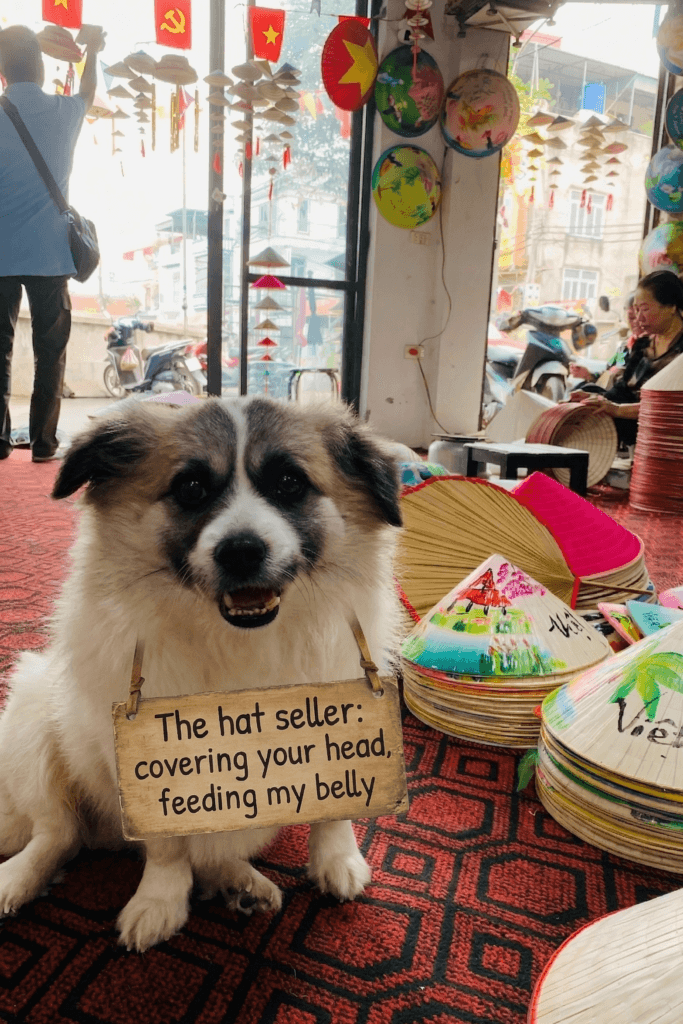


Craft Your Own Story at Chuong Conical Hat Village

Join us!

Bat Trang ancient village

Pottery artisan is making in Bat Trang ancient village.

1. Introduction: The Soul of Hanoi’s Craft

Just an hour’s drive from the center of Hanoi, Bat Trang Ancient Village waits for you along the peaceful Red River. The name “Bat Trang” means “The Great Yard,” and for over 600 years, this place has been the heart of Vietnam’s ceramic art. It is not just a place find some pottery products; it is a living story where you can watch artists create magic from mud or even sit down and make your own masterpiece. Let’s explore why this is the most famous Bat Trang Ceramic Village in the country.

2. History & Culture of Bat Trang Village

2.1. The Legend of the Three Scholars

The story of the village started long ago when three scholars were sent to the Northern Song Dynasty. They learned the secret techniques of making ceramics and brought that knowledge back home. They taught the people of Bat Trang how to turn clay into art. Since then, the village has grown stronger every day. In 2004, the “Bat Trang” brand was officially born, helping these beautiful products reach people all over the world.

2.2. Community Values

For the people here, pottery is more than just a job; it is their life. Every piece of ceramic tells a story of the Red River Delta. From the ancient crackle glazes to the hand-painted flowers, the products of Bat Trang ceramic village are masterpieces that carry the spirit of Vietnam.

3. What to Do in Bat Trang Ancient Village

3.1. Wander Through Bat Trang ancient village alleys

Don’t just stay on the big roads! Take a walk into the small, quiet alleys. You will see old walls covered in moss and tiny houses that have stood for hundreds of years. It feels like a peaceful “time machine” away from the busy city.

Bat Trang village tour includes walking through a winding alley in the old village.

3.2. Visit the Famous Bat Trang Pottery Museum

This is the most famous building in the village now. The design looks like 7 giant clay “pottery wheels” spinning together.

A Special Look: From below, the swirling lines look like the Siq canyon in Petra, Jordan. From far away, it looks like a traditional kiln (oven) or the flowing water of the Red River. It is built with local red bricks and is a must-visit spot for photos!

 the Famous Bat Trang Pottery Museum

3.3. The House of Mr. Le Long (A Cultural Meeting Point)

This is a very special stop. Mr. Le Long, a war veteran, lives in a house that mixes a small Vietnamese cottage with a grand French mansion. Here, you can listen to his real-life stories about the war and the history of Vietnam. It is a place where history and culture meet.

The fusion of Asian and European cultures in Bat Trang ceramic village

3.4. Authentic Bat Trang Ceramic Shops

At the local market, you will see thousands of colorful products. If you want to find an authentic Bat Trang ceramic shop, look for stores where you can see the artisans working. You can buy everything from tea sets, small coffee cups, plates to beautiful home decor. Each item is handmade and unique.

A traditional pottery local market in Bat Trang village

This is also one of the best places to find: 4 Exciting Reasons to Visit Quang Phu Cau Incense Village

3.5. Join a Bat Trang Pottery Class

One of the most fun things to do is to become an artist for a day! In a Bat Trang pottery class, a local teacher will show you how to use the spinning wheel. You can mold the clay with your own hands and create your own bowl or vase to take home as a souvenir.

Hands-on pottery experience in Bat Trang pottery class

3.6. The “Memory House of Fire Road”

Nestled deep within Bat Trang ancient village, hidden in a small alley, this old house tells “big stories.” For generations, artists have worked here under the heat of the fire. The walls and roofs seem to remember every rainy and sunny day. Even when the work is hard, the artists always have a smile on their faces.


During a visit to Bat Trang pottery village in Hanoi, you will have the opportunity to witness firsthand the artisans painting and decorating their pottery products.

4. How to get to Bat Trang pottery village?

4.1. By Public Bus (The Best Value)

Taking Bus No. 47A (Long Bien – Bat Trang) is the easiest way. It costs only 10,000 VND and drops you right at the village gate. It takes about 1 hour, and you can enjoy the view of Hanoi along the way.

4.2. By Motorbike or Private Car

If you want to be more active, you can drive yourself. There are two easy ways:

Route 1: Chuong Duong Bridge – Long Bien – Xuan Quan Road – Giang Cao, Bat Trang Commune.

Route 2: Vinh Tuy Bridge – Co Linh Road – Giang Cao, Bat Trang Commune.

Tip: Use Google Maps to find the fastest way and avoid traffic.

4.3. By River Boat (A Poetic Experience)

For a different view, you can join a Bat Trang ancient village tour by boat. Floating down the Red River to visit the ancient craft villages is a very romantic and peaceful experience.

Bat Trang is waiting for you with its warm fire and beautiful clay. Come and write your own story in this 600-year-old village!

– The Hanoi Artisan


Craft Your Own Story at Bat Trang Village


Join Us!